



Thrissur Pooram, Kerala’s most celebrated temple festival, was instituted in 1796 by Sakthan Thamburan, the Maharaja of Cochin, after local temples denied entry to Arattupuzha Pooram. Maharaja unified ten temples to converge at Vadakkunathan Temple, creating what is today hailed as the “Mother of All Poorams.” Held in the Malayalam month of Medom (April-May), the festival attracts thousands of devotees and tourists, blending sacred rituals with grand cultural displays.
The grand spectacle unfolds with Kodiyettam, a ceremonial flag-hoisting that marks the start of Pooram. This is followed by utsavabali, where offerings are made at specific temple spots to appease both benevolent and malevolent spirits. The Aarattu ritual involves bathing the deity’s replica (thidambu) in the temple pond with ceremonial poojas. Other ancient customs, such as Gramabali and Poorapara, connect the deity with the wider community through symbolic visits, offerings, and blessings.
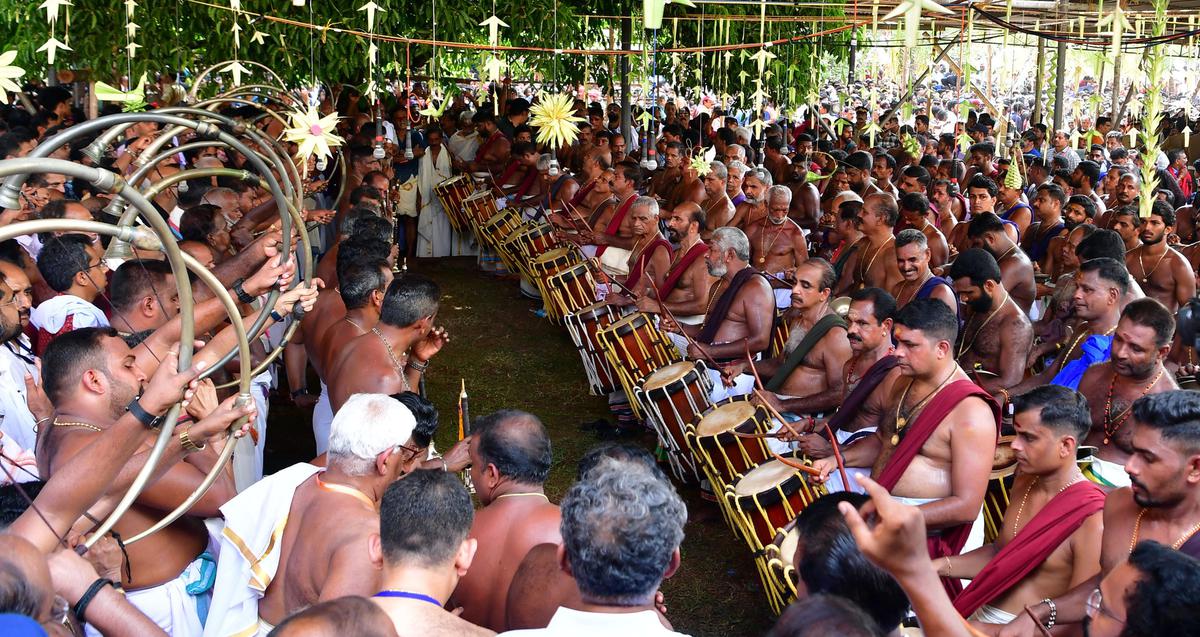
The processions from the Paramekkavu and Thiruvambady temples, accompanied by eight other participating temples, showcase richly adorned elephants, rhythmic percussion performances, and coordinated rituals. Highlights include the Ilanjithara Melam—a spectacular percussion display featuring more than 250 artists—and Kudamattam, the colorful exchange of umbrellas atop elephants. The Madathil Varavu and Purappadu processions further enhance the spiritual atmosphere with their traditional music and meticulous execution.
Preceding the main event is the Chamayamkazhcha, an exhibition, offering cultural displays and trade stalls. The climax features dazzling fireworks, including four major displays, such as the famous Pakal Vedikkettu, which light up the sky in a burst of colours and sound. The final day, known as Pakal Pooram, features farewell rituals between deities, music, and a mini fireworks display, drawing large crowds, especially families and elders.
Thrissur Pooram is a majestic confluence of devotion, music, and visual grandeur. More than just a temple celebration, it reflects Kerala’s spiritual heritage and collective joy. From sacred rituals to artistic expressions, the festival unites people across faiths and cultures in an unforgettable celebration of divine presence and community spirit.