



In the heart of Assam, where the mighty Brahmaputra flows with both grace and power, lies a hidden jewel cradled by the river’s currents—Umananda Island, also known as Peacock Island. Surrounded by water and silence, it is a place where time appears to slow down, and every breeze carries whispers of ancient devotion. Here, upon a hill once scorched by divine fury, rises the Umananda Devaloi, a temple that glows not in gold or grandeur, but in timeless sanctity. This is not just a temple—it is a confluence of nature, mythology, art, and deep spiritual yearning.Umananda Island holds the distinction of being the smallest inhabited riverine island in the world. Locally known as Bhasmacala or Bhasmakuta, the island offers a tranquil retreat from the mainland chaos. Accessible only by ferries and country boats, the short voyage to the island feels like a sacred passage into a different realm—one of silence, and sanctity.
At the soul of the temple resides Lord Shiva, in his form as Bhayananda—a tranquil yet powerful manifestation. The name Umananda is a blend of “Uma” (another name for Goddess Parvati) and “Ananda” (bliss). Thus, Umananda signifies “the one who brings happiness to Uma.” This deity is not just an object of veneration but a presence that is deeply felt—particularly on days when the winds echo with hymns and the river mirrors the light of prayer lamps.
The existing brick temple was constructed in 1694 CE under the patronage of Ahom King Gadadhar Singha (1681–1696), one of the strongest rulers of the Tai-Ahom dynasty. The responsibility of construction was entrusted to his Bar Phukan, Garhganya Handique, showcasing the king’s reverence toward Shiva. However, this sanctuary’s roots stretch deeper into time. Sculptures and carvings on site hint at a post-Gupta origin, revealing an earlier phase of spiritual activity. Remnants of a Chaturbhuja female figure, ancient caves, and rock-cut deities of Ganesha and others point to a continuous stream of worship.
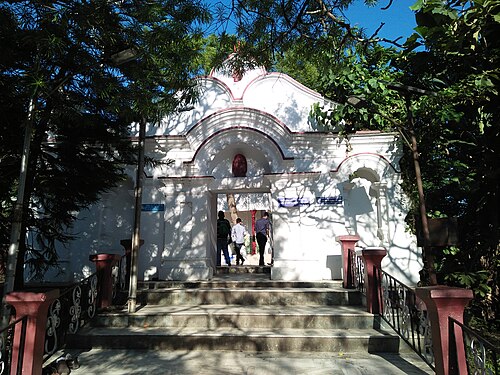
The temple’s sacred quietude was once desecrated by Mughal incursions. Ironically, Aurangzeb later granted it a jagir when Guwahati came under Mughal rule. But the greatest trial came in 1897, when a powerful earthquake devastated much of the original structure. Rising from its ruin, it was restored by a benevolent local merchant, whose devotion rebuilt what nature had tried to erase. Interestingly, this restoration added Vaishnavite inscriptions within a Shaivite shrine—symbolic perhaps of Assam’s inclusive spiritual canvas.
The legends that envelop Umananda Temple are as ancient as the Brahmaputra itself. According to the Kalika Purana, this was the place where Lord Shiva meditated in deep austerity. When Kamadeva, the god of love, dared to disturb this penance, Shiva’s third eye flared with fury. In a flash, Kamadeva was reduced to ashes. Thus, the hill came to be called Bhasmacala—the hill of ashes. Another mystic narrative claims that this island was once home to the celestial nymph Urvashi, who would bring Amrit (divine nectar) for the pleasure of Goddess Kamakhya, making it also known as Urvasi Island. These legends breathe life into the temple, making every rock, tree, and ripple in the river feel touched by myth.
Though modest in size, the Umananda Temple is an architectural poem in stone. Reached by a steep flight of stairs, the main shrine is flanked by carvings that reflect a pan-Hindu reverence. Engravings of Surya, Ganesha, Shiva, Devi with a scorpion emblem, Vishnu, and his Dashavatara (ten incarnations) grace the temple’s surfaces. These depictions are more than ornamental—they are eternal expressions of the Assamese artisans’ faith, etched by hands that believed every stone could hold the divine. Earthquake of 1897 destroyed much of the original structure of the temple, the rebuilt temple preserves the spiritual atmosphere of the past.
Throughout the year, Umananda Island remains calm and quiet, save for the chants of priests and the murmur of the river. But on Maha Shivratri, the silence gives way to a celebration of divine energy. Devotees throng the island, offering bilva leaves, milk, and heartfelt prayers. The air vibrates with devotion, and the small island becomes a spiritual epicenter. According to popular belief, worship on Amavasya, especially when it falls on a Monday, brings immeasurable bliss and liberation. Another important occasion here is Shiva Chaturdashi, celebrated with deep reverence.
Boats and ferries available at Umananda Ghat, Guwahati, Assam near the State Bank of India and Ashoka Hotel in Guwahati, ferry pilgrims to and from this sacred isle, adding to the charm of a spiritual journey over water. Umananda Temple is not just a shrine built on a hill—it is a divine story etched into the fabric of Assam’s culture. As the Brahmaputra flows endlessly beside it, carrying legends, prayers, and dreams across its waters, Umananda stands still—a flame of faith undisturbed by time, tides, or turmoil. Whether it is the call of Shiva’s silence or the allure of ancient myth, this temple beckons every seeker to pause, reflect, and find joy in the lap of the eternal.
Let the soft whisper of oars on water and the echo of temple bells guide you into this sacred island—where the bliss of Uma and the grace of Ananda eternally unite.