



Nestled amidst the serene hills of Hajo in Assam, the Hayagriva Madhava Temple stands as a magnificent confluence of faiths—where the divine form of Vishnu is venerated by Hindus and where Buddhists believe the Buddha attained parinirvana. This sacred temple, set atop the Monikut hill, is not merely a place of worship but a living testimony to India’s pluralistic spiritual heritage. With its artistic grandeur, ancient origins, and uninterrupted devotion, it beckons pilgrims, historians, and spiritual seekers alike.
Located about 30 km west of Guwahati, the town of Hajo in Kamrup district is a unique spiritual hub. It is home to diverse religious monuments—including the Hayagriva Madhava Temple, the Islamic shrine of Powa Mecca, and the Kedareswara Shiva Temple—drawing Hindus, Buddhists, and Muslims to its sacred landscape. The town lies close to the northern bank of the Brahmaputra River and is surrounded by gentle hills like Monikut, Garurachal, and Madanchala, each hosting a revered shrine.
The presiding deity of the temple is Hayagriva Madhava, a rare and divine horse-headed form of Lord Vishnu. The black stone idol, enshrined in the sanctum sanctorum, exudes spiritual solemnity. Four subsidiary stone idols accompany the main image. Hayagriva, representing supreme wisdom and purity, is a revered figure not only in Hinduism but also in Tibetan Buddhism, where he is viewed as a fierce manifestation of Avalokiteshvara.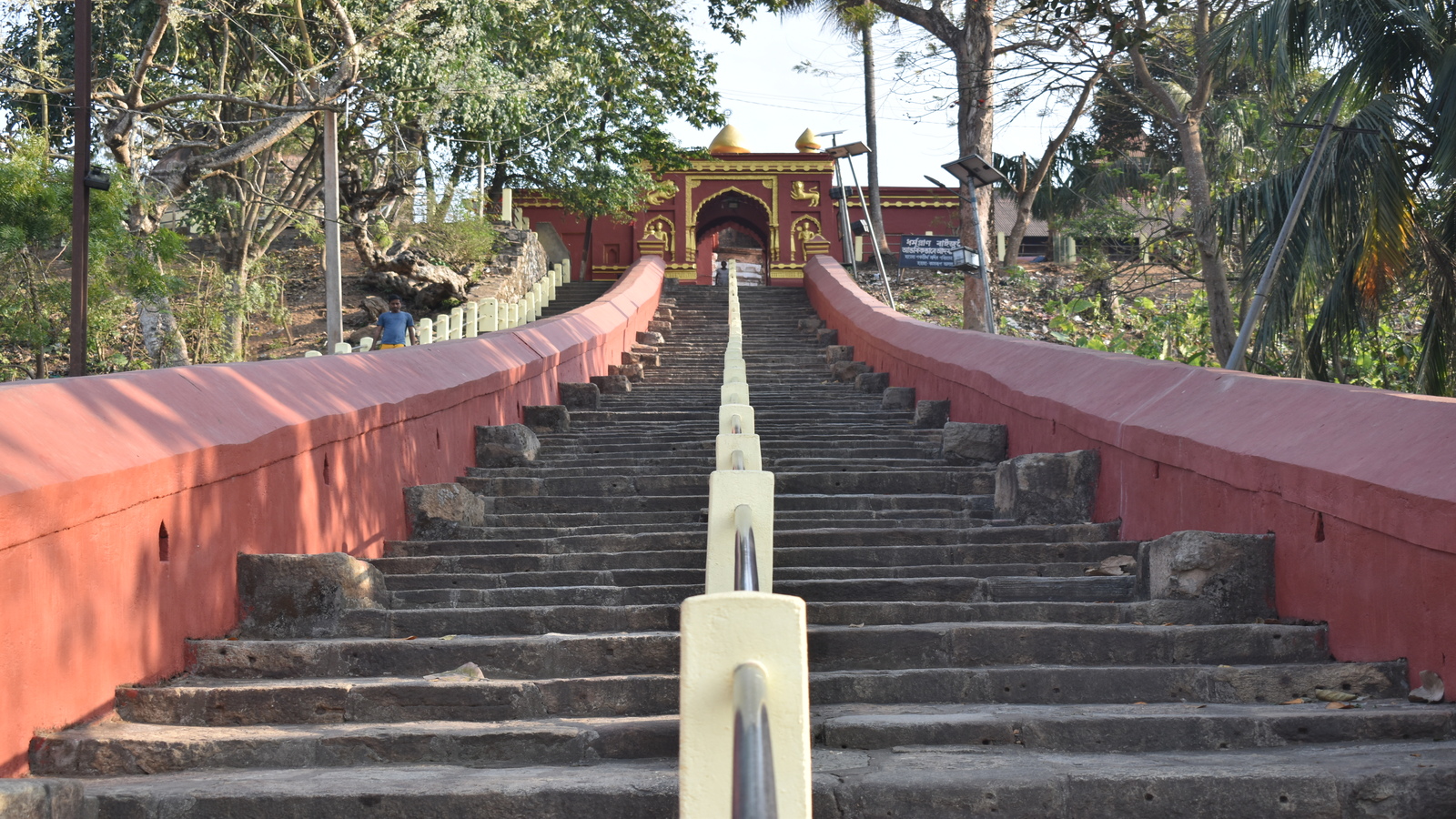
The Hayagriva Madhava Temple is a splendid stone edifice reflecting the artistic brilliance of medieval Assamese architecture. One of its most striking features is the continuous row of elephant carvings at the base—comparable in grandeur to the rock-cut temples of Ellora. The outer walls are adorned with vivid relief sculptures of the ten avatars of Vishnu, scenes from the Ramayana and Mahabharata, and devotees in procession. A large pond nearby, Madhab Pukhuri, adds to the serene ambiance. An adjacent structure called Doul Griha, believed to be built by Ahom King Pramata Singha in 1750, further complements the sacred precinct.
The temple has a layered history. While some scholars believe it was first built during the Pala dynasty in the 6th–10th century, the current structure is widely attributed to Koch King Raghudeva Narayan, who rebuilt it in 1583 CE. Later, Sayani, the first wife of Kalia Bhomora Borphukan, donated a plot of land and a family of paiks (servitors) for the temple’s upkeep. During the Ahom reign, especially under Kamaleswar Singha, the temple enjoyed continued patronage. A significant devotional tradition here is the akhanda deepa—an eternal lamp that remains perpetually lit through a simple oil tube system.
According to the Kalika Purana (11th century), Vishnu in the form of Hayagriva Madhava was established on Monikut hill, the very site of the temple today. The symbolism of Hayagriva—victory of divine knowledge over ignorance—adds profound spiritual meaning. Interestingly, many Buddhists from Tibet and China believe that the Buddha attained parinirvana here, not at Kushinagar. This belief has made the temple a shared site of veneration, where Buddhist monks continue to visit for meditation and homage. The inclusion of Buddha as the ninth avatar of Vishnu in temple carvings subtly bridges both religious streams.
The temple comes alive during major festivals, each celebrated with grandeur and community participation:
• Doul Utsav (Holi) – Celebrated with vibrant colors, music, and traditional performances in February–March.
• Bihu – Celebrated thrice annually (Rongali in April, Bhogali in January, and Kongali in October) marking seasonal and agricultural rhythms.
• Janmastami – The birth of Lord Krishna is celebrated in August–September with midnight rituals and devotional songs.
• Navaratri / Durga Puja – Honoring the Divine Feminine in September–October with elaborate worship.
Pilgrims also visit Madhab Pukhuri to take sacred baths and offer prayers. The temple’s interfaith inclusivity is further highlighted by visits from Buddhist monks and Hindu ascetics, making rituals here deeply layered and spiritually inclusive.